Bat Survey - Cottage, Neath
Background
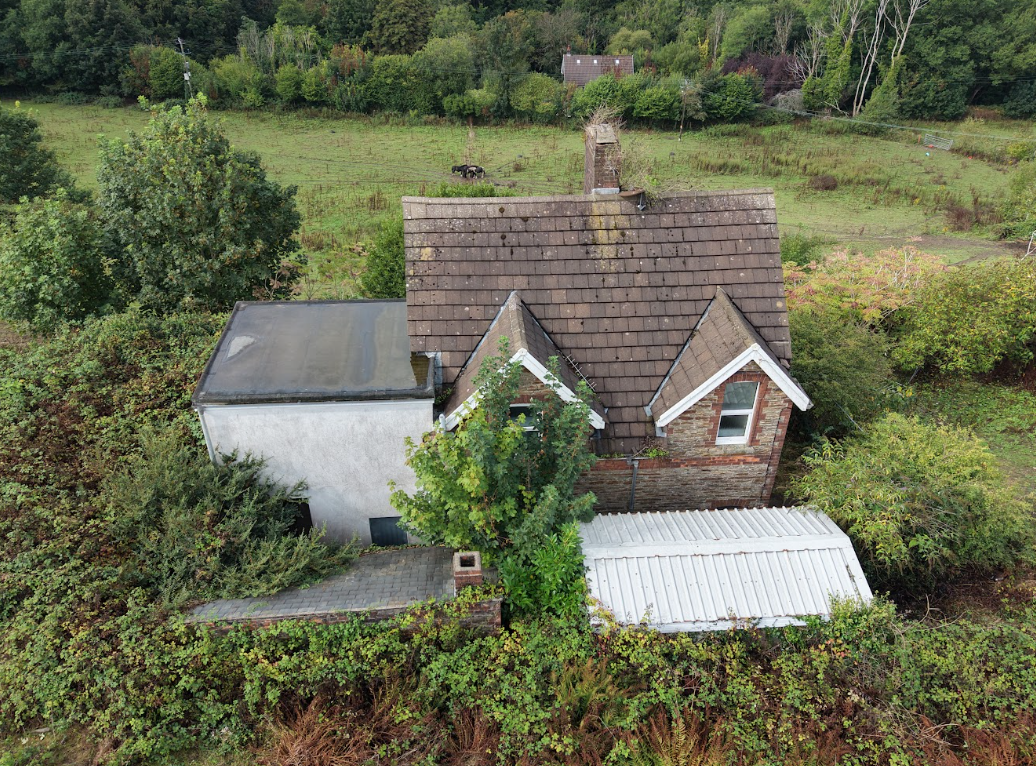
This cottage is a small pocket of heaven. While being a stone's throw from Neath's town centre, it offers the privacy of a more rural location, surrounded by beautiful fields with friendly and inquisitive horses making for fantastic company. Unfortunately, despite it's many virtues, this property has been abandoned for years. Surrounding shrubs and trees have taken over, which has been fantastic news for the birds who have eagerly swooped in to forage and rest upon the plentiful vegetation this structure now offers.
While the birds (and potentially bats) call this quaint structure home, amidst the ongoing housing crisis, it would be lovely for it to also be suitable for Homo sapien residency. This is exactly what the current owners plan - a complete renovation to make it habitable once again.
Preliminary Roost Assessment
The first stage of any bat survey is the Preliminary Roost Assessment, or the PRA once you grow tired of all of those syllables. A PRA is an internal and external inspection of a structure in order to determine how suitable in may be for roosting bats. Old buildings such as these, especially quiet, run down, abandoned buildings, make great homes for bats. There are generally lots of gaps and crevices for them to squeeze into, and the house, being people-free, tends to be dark and quiet, another great selling point for our winged mammals.
Needless to say, we went into this survey with an expectation of potentially encountering bats. The exterior of the building was as anticipated - lots of gaps in the roof where tiles where perhaps missing, damaged, or have slipped, gaps under soffits and fascia aplenty. All of these give potential access into the roofing area for roosting bats.
Usually, when we move into the interior inspection, the loft space is the focus of our investigations. Bats like quiet, dark, private spots, so tend to avoid the residential parts of the building unless they become disoriented. They would be as affronted to find themselves in your living room with you as I am sure you would be to find them there. With abandoned properties such as these, the situation is a little different. The whole interior is potentially up for grabs for bats, so we carefully scoured the floors, windowsills, and walls for any signs of bats.
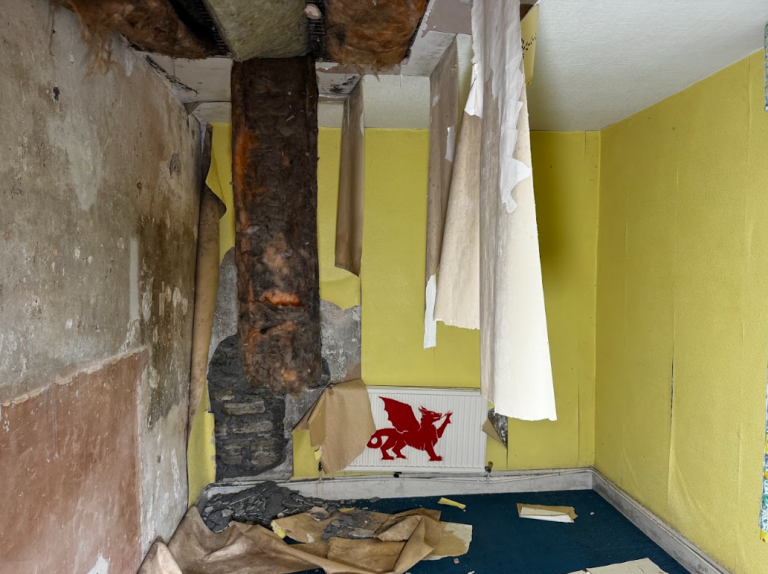
Upon making our way upstairs, we were surprised to see that the loft had made its way into the master bedroom, the ceiling having caved in and a cascade of insulation draping to the floor. Unsurprisingly, a thorough loft inspection could not be undertaken. We were able to inspect what was within an arm's reach of the loft hatch, but further exploration would be risking surveyor safety and whatever structural integrity the ceiling had left.
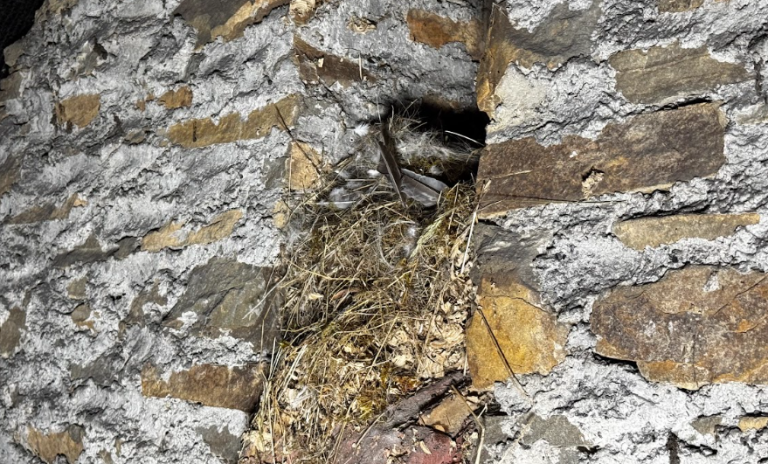
We did not manage to find any bats or evidence of them having roosted in the loft space from our rudimentary inspection, but did find what remained of an old bird nest in an alcove!
The last thing we take into account during our PRAs is the surrounding habitat for bats. A building can be lovely and cosy with lots of potential gaps, but what would be the point in a bat moving in somewhere that is miles away from a good source of food? As we have already mentioned, the building is surrounded by overgrown vegetation, which attracts both birds and bugs, and bugs are the preferred food source for our British bats. Further farmland and parcels of woodland are also ideal for bats either commuting to richer sources of food, or for snack stops.
Overall, it was determined that the property had high potential for roosting bats. Following official survey guidelines for bats, we then moved onto our next survey steps.
Dusk Emergence Surveys
PRAs do not give us all the information needed to complete a bat report. During "bat season" (the May - September period), bats need to emerge from their roosts every night to forage. As such, the best way to tell if a building has bats is to hang around outside it at sunset and see if anything flies out. It is a little more technical than that when we show up in an official capacity. We bring specialist equipment, such as bat detectors and thermal cameras, so we can hear the hypersonic call of bats, and so that we can still see them when it gets dark.
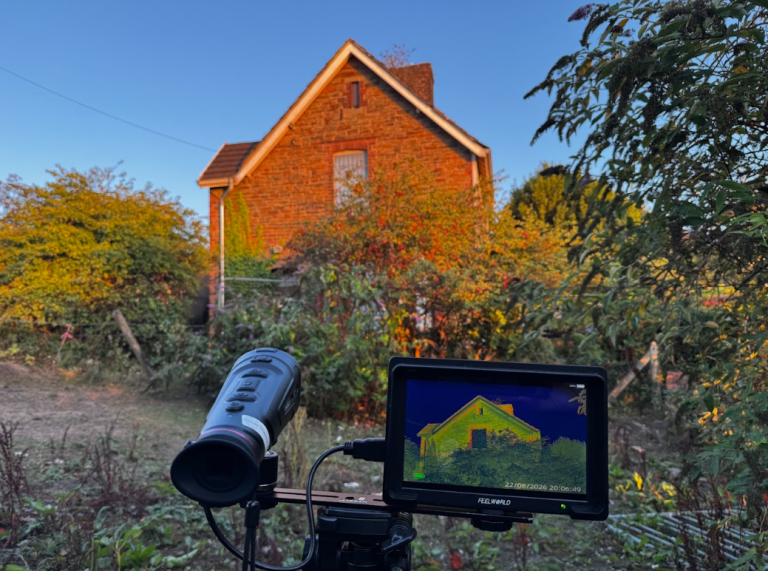
Where the bats eluded us in the PRA, they were caught on film this time. In fact, eight of these creatures of the night call this building home, including this one below!
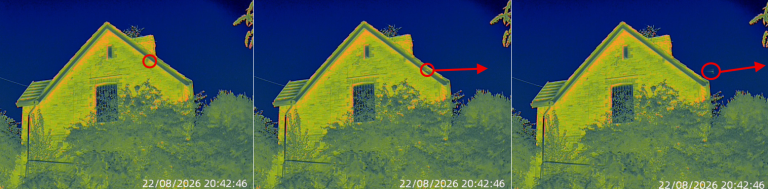
Bats transition between different roosts all the time. It could be this cottage today, but the barn down the road tomorrow. As such, we have to repeat this survey several times in order to be sure we have identified all the bat species that may be present, exactly where they are roosting, and how many of them there are.
Next Steps
Bat roosts are all legally protected, so all of the little crevices in this roof can now not be altered, damaged, or destroyed without it being a criminal offence. This is not the end of the road for the development though!
On behalf of our client, we will go on to apply for a European Protected Species licence. This licence gives permission for a bat roost to be disturbed, damaged, or destroyed under specific circumstances. These circumstances will likely be that an ecologist must be on site while the bat roost is being affected in case a bat is found. The ecologist can then safely capture the bat to ensure it does not become injured as a result of the development. The bat roosts lost will also have to be replaced. So, for example, if a whole re-roofing is undertaken and bats can no longer use the gaps previously there, we will work with the client to find a solution that works for both them and the bats. Roost replacements often include access slates and ridge tile gaps being installed into the new roof so that bats can can back into the building while being far away from the human residents that will hopefully soon be able to move in.
Are you in need of an experienced ecologist to help you with your bat needs? Get in touch to arrange a consultation today!