Bat Survey - Kidwelly, Carmarthenshire
Background
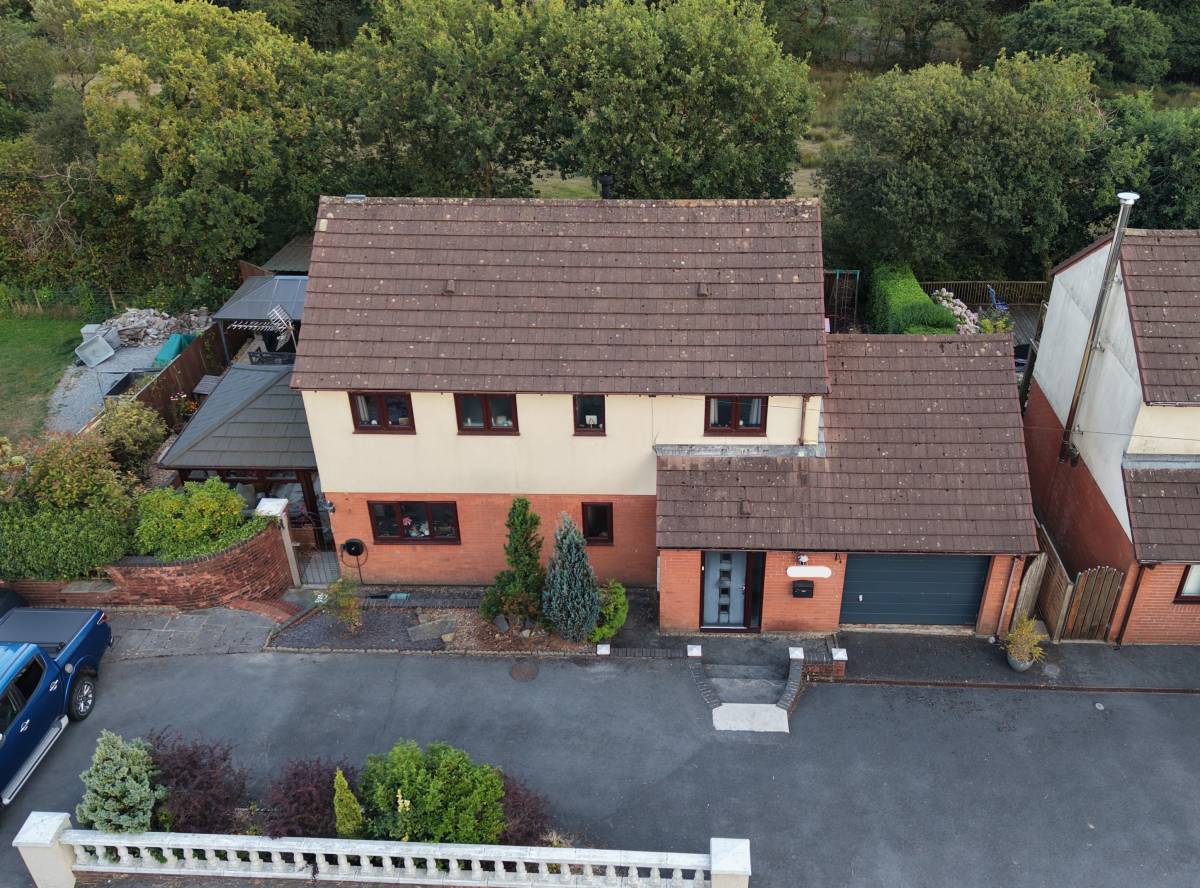
This lovely home is located in a remote area, surrounded by luscious fields and trees that offer remarkable views for the family that live here. Now looking to extend their home to make room for a growing family, we were called in to conduct the bat surveys needed for the Local Planning Authority.
Preliminary Roost Assessment
The first stage of a bat survey involves a visual internal and external inspection in order to determine how suitable a building is for bats, as well as the identification of any evidence of bats.
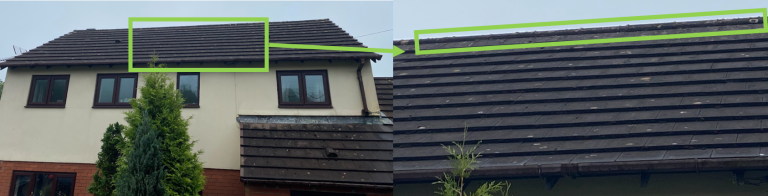
While inspecting the property, various potential roosting features were spotted, such as gaps along the ridge tiles and lifted roof tiles where sunlight could be seen spilling through into the loft space.
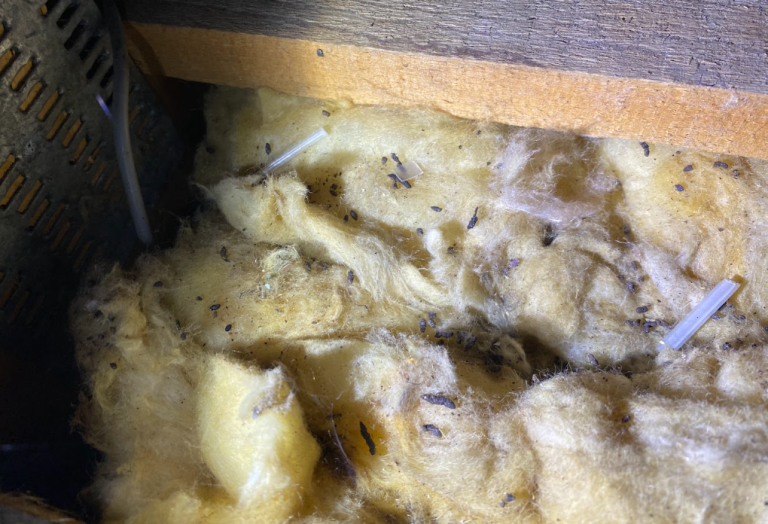
This, coupled with the great surrounding habitat, makes for pretty good roosting potential for bats. However, what really solidified this assumption was the discovery of bat droppings. Hundreds of tiny brown dots scattered across the floor were collected into a sample pot that can then be sent for DNA analysis. Finding bat droppings lets us know with a certainty that bats have been roosting at a property and can give indications of what species may be present and how many bats we should anticipate.
Dusk Emergence Surveys
After we confirmed that bats have visited this home, we prepared for the next step - dusk emergence surveys. During these surveys, we set up thermal cameras and experienced surveyors outside the building around sunset and watch as bats leave the building to go foraging at night. These surveys give us a much more accurate idea of how many bats are present and where exactly they gaining access to a property.
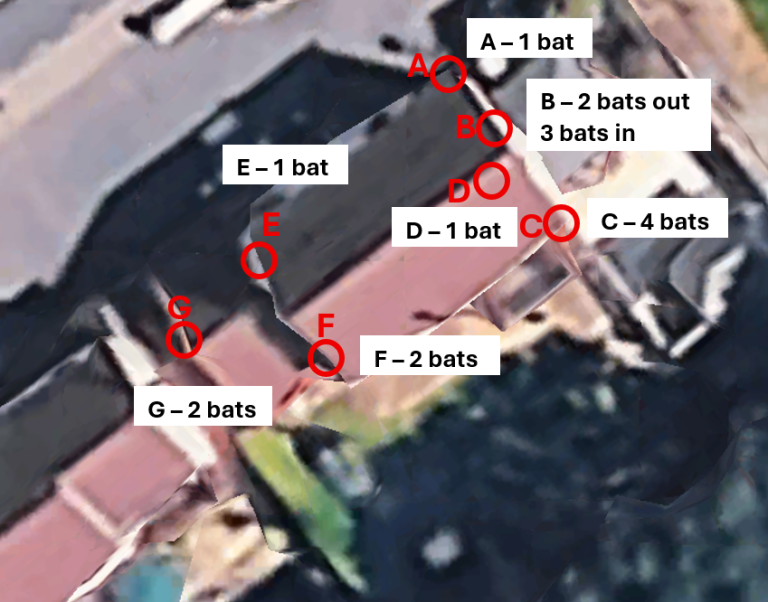
Over the course of multiple surveys, we counted a maximum of nine bats that call this house home alongside the human occupants. Bats were seen to be using eight separate access points scattered over the entire roof space. Roosts that only host a few bats each very likely belong to non-breeding females and solitary males, whereas a congregation of bats in one place is indicative of a maternity roost, which, as it sounds, a roost for mothers raising their babies together.
Next Steps
We now know exactly how bats are using the property, so now what? What was the point in all those surveys?
Bats are all protected under UK law, which makes it a criminal offence to disturb them or damage their roosts, amongst various other protections. Unfortunately, the development planned at the property will lead to the destruction of a bat roost as well as various access points that are identified in the picture above. This is not the end of the road. The development can go ahead as planned, but with a few additional stipulations to ensure the bats are kept safe.
This means applying for a European Protected Species licence. This licence will give us permission to interfere with bats and their roosts, so long as we apply contingencies to ensure bat safety, and reinstall bat roosting features so that the bats do not lose a vital home.
Do you have a family home you are looking to extend? Get in touch to see how we can help you with your planning permission!