

Bat Survey - Bar, Resolven, Neath
Background
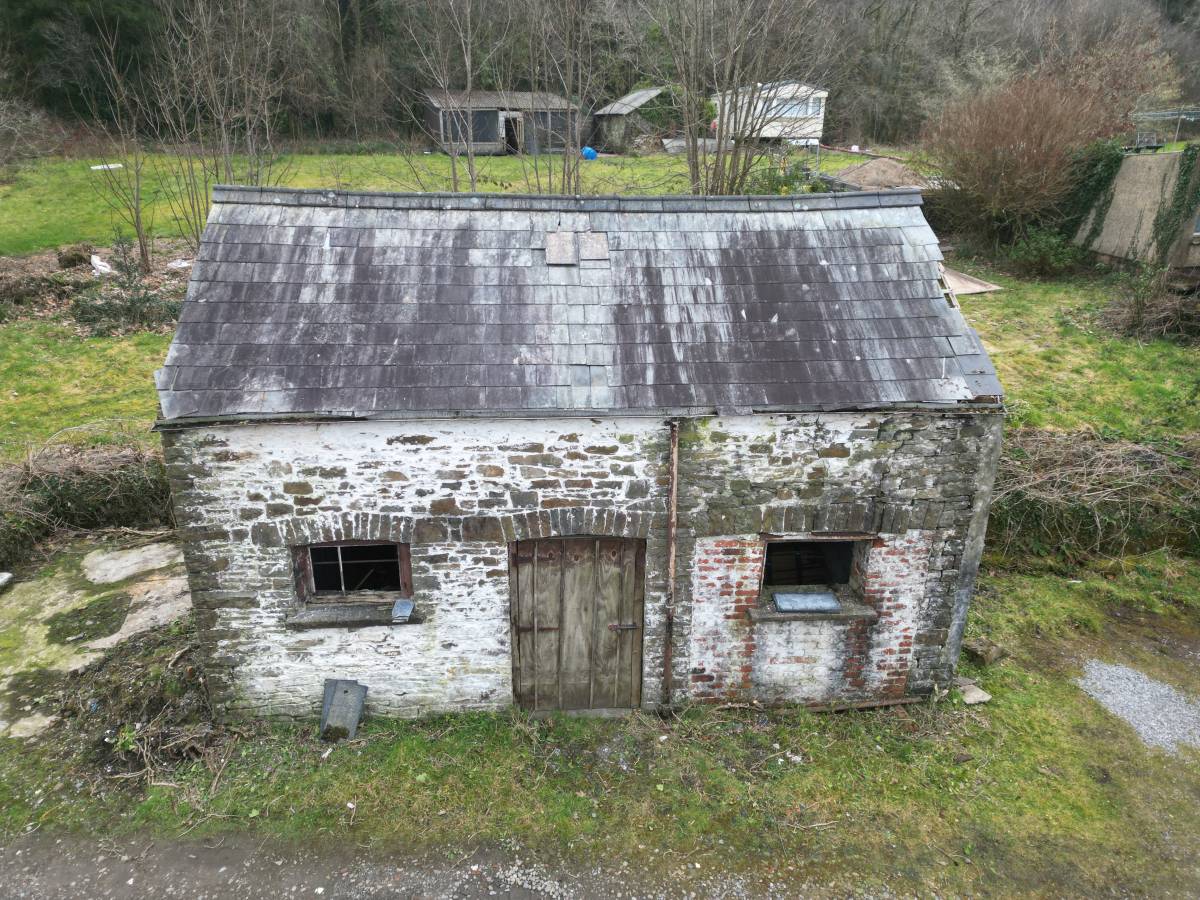
This old barn has only been used for the storage of machinery and other construction materials. The owner would like to renovate the building for residential usage, breathing new life into this beautiful stone build.
Preliminary Roost Assessment
When we conduct Preliminary Roost Assessments (PRAs) we analyse a building’s suitability for bats, from the construction materials of the building itself, to evidence of bats. This barn had all of it.
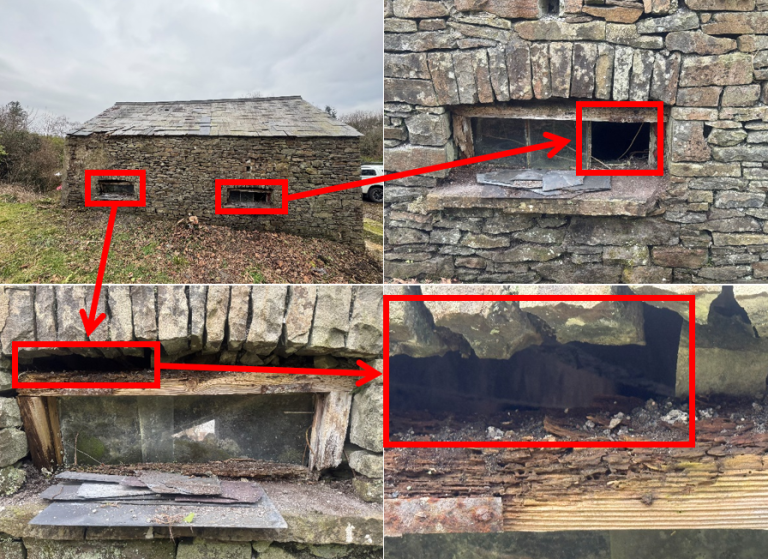
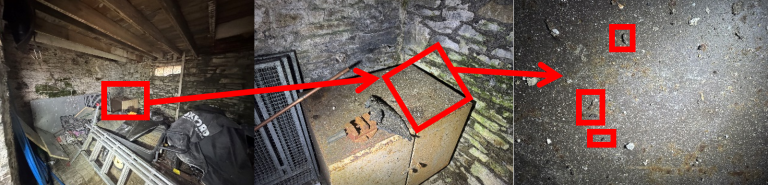
A stone construction with a slate roof is usually highly suitable for bats due to the stable temperatures they provide for bats. There was also no shortage of potential bat access points, with windows missing glass, missing roof slates, and large gaps in stonework. In the upper level of the barn, we found a few scattered bat droppings that we collected for DNA analysis. The results revealed that the droppings belong to lesser horseshoe bats! Horseshoe bats are of special conservation interest due to their rarity, so this was an exciting result for us to have discovered.
Dusk Emergence Surveys
After we have completed a PRA, we usually have to return to conduct a dusk emergence survey. Bats are nocturnal creatures that leave their roosts around dusk to fly around and forage for the night, so we set up cameras around the building to film the bats, as well as bat detectors that record their calls, helping with species identification.
During the first two surveys, we recorded exactly what we expected to. Lesser horseshoe bats flew into the barn through one of the windows without glass and flew around in circles on the ground floor of the barn. The bat stayed inside for around 20 minutes before exiting through another of the glassless windows.
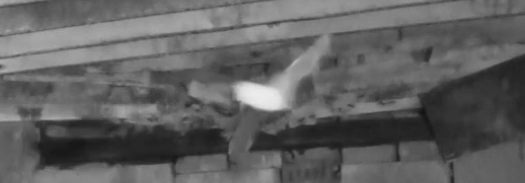
It wasn’t until our third emergence survey at the site that we recorded pipistrelle bats emerging from the roof area, bargeboards, and gaps in the stonework. This is another great example of why multiple surveys are necessary and why it is important to adequately space these surveys out. Without all three of the surveys, we wouldn’t have surveyed at the right time to catch the pipistrelle usage of the building.
Next Steps
After we complete our reports, they can be submitted to the LPA to await planning approval. As soon as planning permission is granted, we can start applying for a protected species licence, allowing the work to go ahead legally.
Unfortunately, an impact of many of the developments we work on is the destruction of a bat roost. It is our job to ensure that those bat roosts are not lost without suitable replacements. The owner of the barn also owns a stone shed located only a few metres from the barn. To compensate for the loss of the barn as a lesser horseshoe and pipistrelle roost, we will be enhancing this shed to make it a more suitable roosting location for the bats that currently frequent the barn.
Need help on a similar project? Please don't hesitate to get in touch!