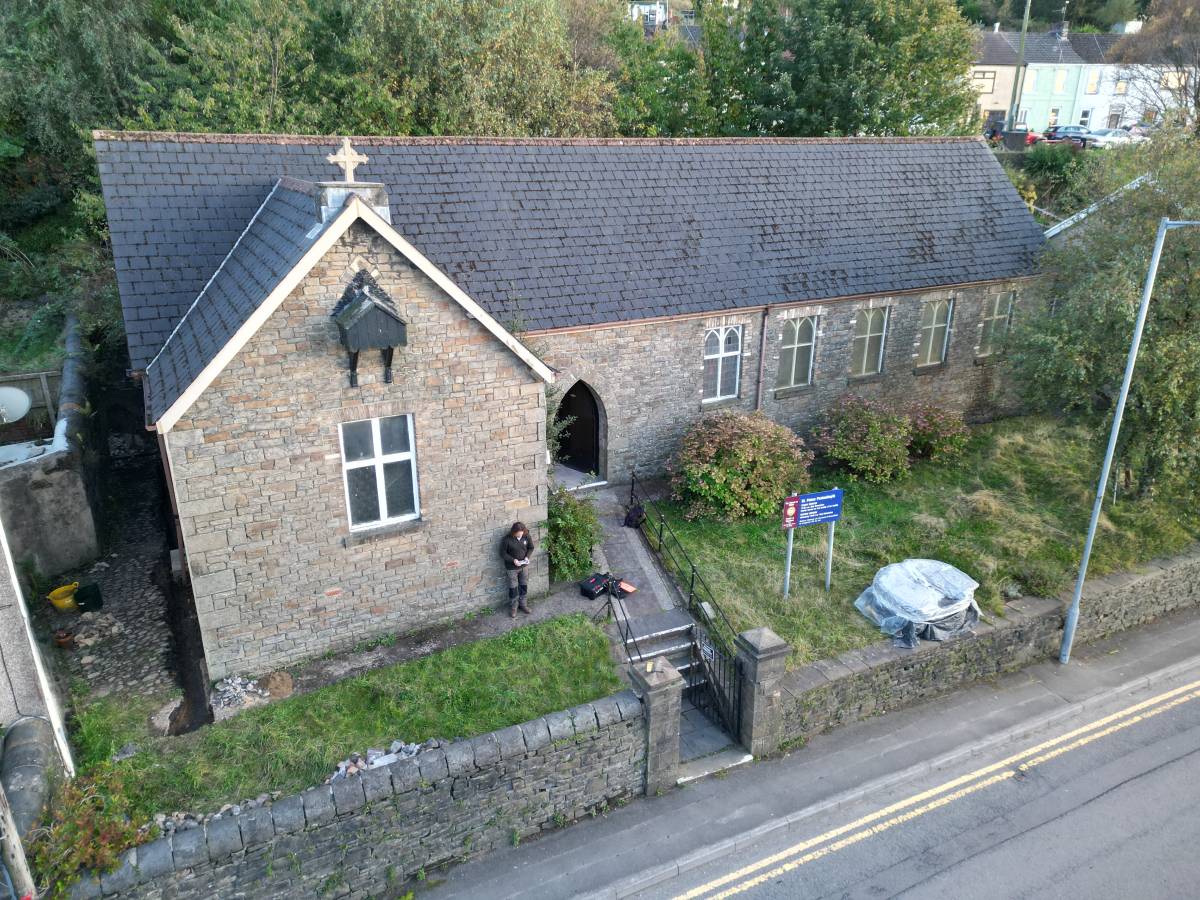


Bat Survey - Church, Killay, Swansea
Background
This beautiful old church has been empty for years, its beautiful vaulted ceilings and stonewalls left unseen and unappreciated. Recently, it was bought by a family who plan to breathe new life into its rooms by renovating it into a beautiful family home that will incorporate the original design of the church. The footprint of the building will remain the same, with internal renovations including the sectioning off of different rooms, and modifications to the roof space including skylights and solar panels.
Preliminary Roost Assessment
When we conduct a preliminary Roost Assessment of any building, we look at three main elements: the surrounding habitat, the external potential bat features, and the internal potential bat features.
Habitat - This church had an overgrown church yard to the rear, including shrubs and semi-mature trees. This acts as potential bat foraging habitat, but isn’t necessarily an area of high quality bat foraging potential. Further afield, there is a large area of woodland, with roads leading to it. Bats use linear features like roads, treelines, and hedges to commute, much like we do, so the roads provide a good commuting path to the quality foraging habitat of the woods.
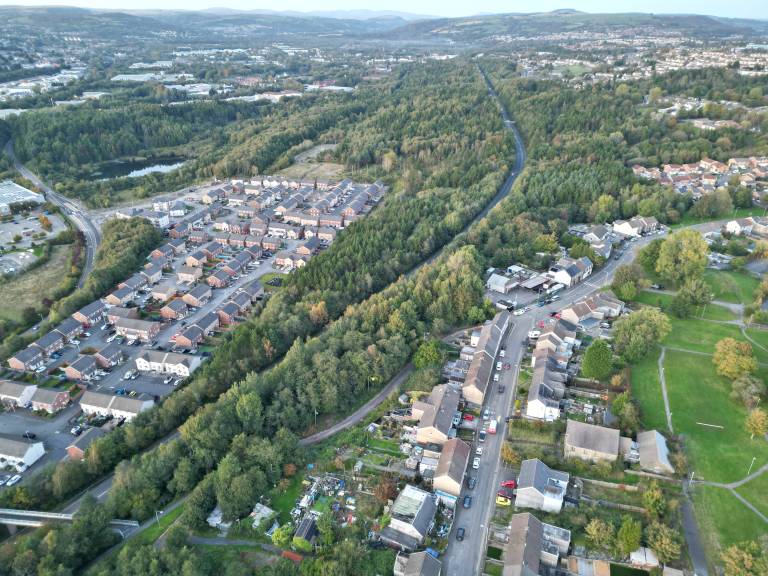
External features - When we search for external features, we are mainly looking to identify parts of the building that a bat could use to gain entry into the structure to roost. Bats are much smaller than most people realise, and can squeeze into gaps as small as 2mm wide, so we use binoculars, zoom photography, a drone, and a trained eye to identify these features.
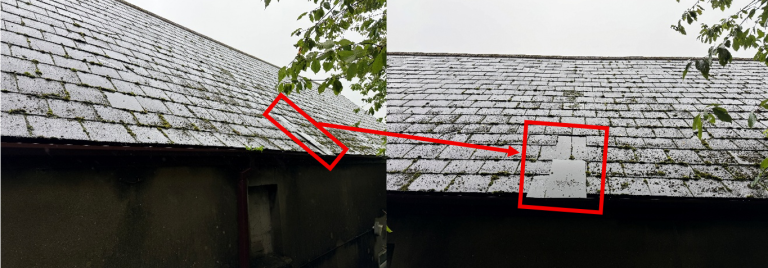
For this church, we identified some slipped/missing roof slates on the rear of the building, gaps under fascia boards, gaps in stonework, and gaps in the decorative brick surrounds around the windows. These external features have the potential to lead to areas that bats can use to roost - such as a dry crevice, a cavity wall, a safe gap between roof slates and roof lining.
Internal features - When we think about internal features, what we are looking for is a place inside a structure where a bat could roost. This is usually a loft space. Bats like large, dark loft spaces with minimal disturbance, lined with bitumen felt, with roughly cut roof timbers that allow them to tuck themselves underneath. This can also include basements and access to a cavity wall.
This church in question had limited internal features. The ceilings were vaulted so there was no loft space present, although there was a bitumen felt lining hidden beneath plasterboarding.
So, overall, we have decent habitat, a few external features, and limited internal features. Overall, we deemed the church to have low bat roosting suitability. Common bat species are opportunistic roosters however, and don’t pay attention to an ecologist’s determination about bat roosting suitability, so guidelines tell us we have to conduct a dusk emergence survey to be completely sure whether bats are present.
Dusk Emergence Survey
Dusk emergence surveys are usually conducted within the core bat activity season of May-August. We were commissioned very last minute on this job, so conducted the survey in September, hoping to gather enough data to ensure the client did not have to wait until next summer to submit their planning permission.
We found one pipistrelle emerging from the property as a result of the survey, captured on the thermal cameras we use to see in the dark for us. A tree obscured the exact access point, but we were able to determine that the bat emerged from a part of the building that will not be affected by the planned works.
Next Steps
Ordinarily, we would recommend additional surveys once bats are found. However, due to the time of year, another survey would likely not yield any further useful information. Instead, we completed the report with the data we had, highlighting the limited internal features and the fact that most external features, including the area the bat emerged from, would not be affected by the proposed development, ensuring the bats are protected with no time delay for the client.
For further information on how we could help you with your household development, please feel free to get in touch!