

But I Don't Have Bats - How You Can Have Bats Without Noticing
When we arrive on site to conduct a bat survey, the most common phrase we hear is - “But I don’t have bats”. Most people assume that they would know if there were bats roosting at their property, which is fair; we like to know what might be occurring in our own homes. Maybe we think that we'd be able to see the furry little creatures peering down at us every time we go up into the loft. Maybe we think they’d be able to hear them scratching and chattering in the roof. Maybe we think we’d be able to smell them or find their droppings.
In this blog, we are going to unpack why these assumptions are not always accurate and how it is possible for bats to go unnoticed for what could be years.
1. Bats don’t “nest” - they roost.
Birds and rodents, other animals that are known to make their homes in buildings, are nesters. They bring in materials to build a cosy resting place for themselves, whether that is sticks and twigs and moss for birds, or paper and cardboard and plant matter for rodents, there is usually a distinct sign that they have been there. Rodents in particular may also chew through material to find ways into buildings or to gain additional nesting material.
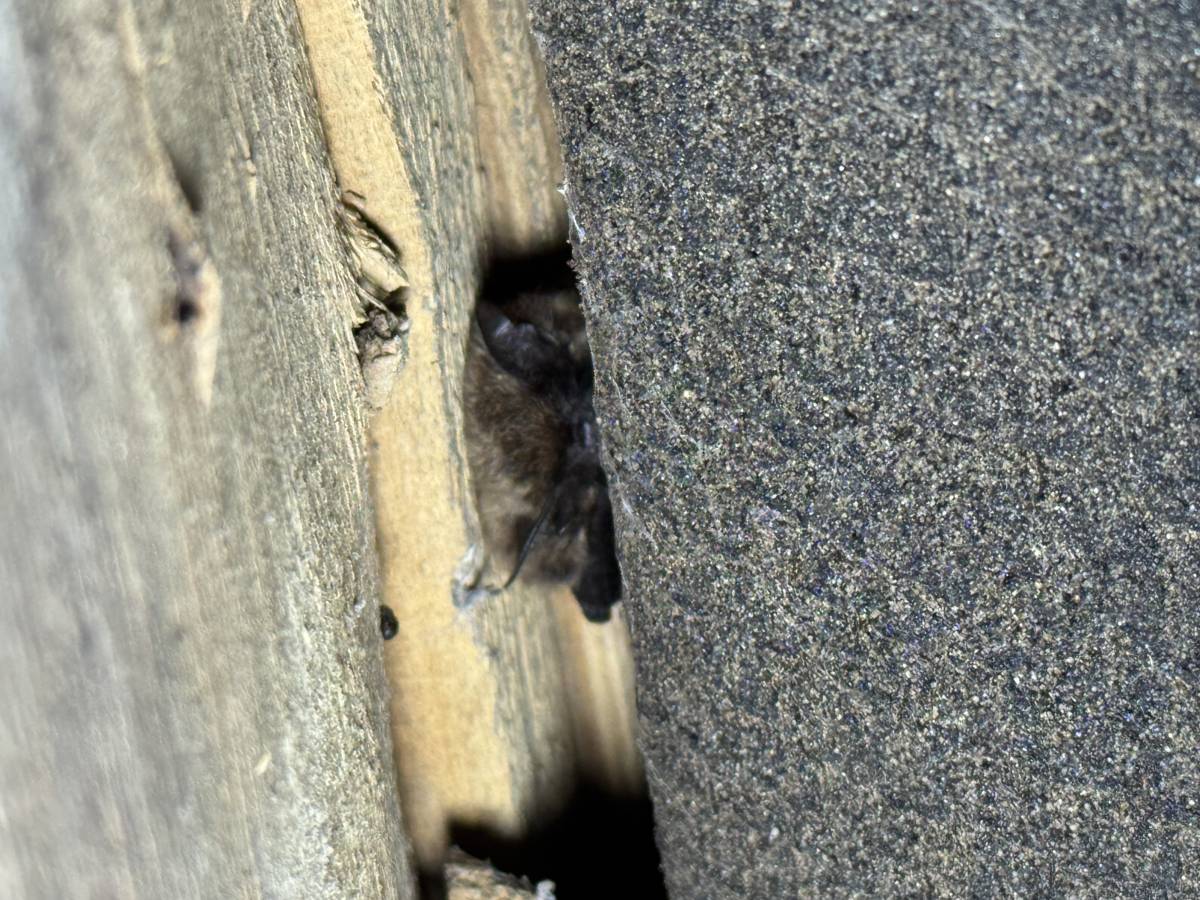
Bats, however, are very polite house guests. The utilise gaps that are already present in the building, whether that’s a raised roof tile or a crevice under a fascia board. They also don’t build nests the way birds and rodents do. Crevice dwellers are content to squeeze into a small gap to sleep there without the need for any additional material, and void dwellers will hang upside-down with their feet anchored onto walls or ceilings or timber beams.
So, there are no distinct signs that a bat has been sleeping in your loft like you might find with other species, particularly not if you do not have training to spot any subtle signs of a bat visitor.
2. Bats are nocturnal
This one seems obvious. Publishing this in October, I am sure we are all acutely seasonally aware that bats are creatures of the night, a winged silhouette against a moonlit sky. When you have birds nesting at your property, you may hear them throughout the day, particularly when the chicks have hatched and hungry mouths are chirping up a screaming chorus. You leave the house for work and look up to see eager avian parents flying back and forth from their nests to feed these loud and demanding little hatchlings. Despite their many virtues, they are not exactly subtle creatures.
Bats, on the other hand, are asleep throughout the day, and evening when they are chatting to each other, they are quiet, whispering in ultrasonic tones that are imperceptible to the human ear. At sunset, they fly silently (to our human ears, anyway) from their roosts to forage, before frequently returning under the cover of dark to feed hungry babies. When bats can squeeze into any gap as small as 2cm, it is unlikely you would be able to spot eagers mothers coming and going under the cover of nightfall without night vision aids and a bat-centred determination.
3. Bats are small!
You may be amazed by online photos of giant fruit-eating bats with 4 foot wingspans on the internet, and as remarkable as these bats are, our native UK bats are just as wonderful while coming in much smaller packages.
Our most common species of bats measure between 3.5 - 4.5 g and can fit quite comfortably between a thumb and finger, which also means that they can hide quite effectively out of sight. Even if they are roosting in loft spaces, you could be in the loft space and not even notice them, particularly crevice dwelling species that can squeeze into gaps between roof timbers that are only a few centimetres wide. They could be right above your head while you’re popping up to put some storage items in your loft and you wouldn’t notice.
Because bats are so small, so are their droppings. If the droppings are not concentrated in one area in particular, they can easily be overlooked or mistaken as insect dirt, especially when mixed in with other dirt. As bat ecologists, we are used to being on the look out for bat droppings and have methods of distinguishing bat droppings from rodent droppings while on site. We also take samples to confirm our conclusions and send for DNA analysis to identify the exact species of bat the droppings came from.
4. Bats can roost out of sight
This leads on quite nicely from our last point of bats being so small. Being tiny creatures, they can easily roost in small crevices out of sight, most often being in the roof area. Bats frequently roost between the roof tiles and the roof lining. When we are on site to oversee work that involves disturbing a bat roost, the roof strip is where we encounter the greatest evidence of bats. Lifting up ridge tiles or roof slates often unveil a whole carpet of bat droppings that have been accumulating for years with no one noticing.
When we first inspect people’s homes for evidence of bats, we very often do not find anything but still recommend further surveys to see if bats are present. Bat surveys come in multiple steps, with this initial visual inspection being the first stage. From these findings, we then recommend between one - three additional surveys where we wait for bats to wake up and fly out of the building at sunset.
If we do not find any evidence of bats, these additional surveys can be a very confusing recommendation - surely we would find evidence of bats if bats are present? If you have bats, surely we would have found evidence of them? This is not necessarily the case. We can inspect a loft space and endoscope small cavities that are safe to reach, but it is impossible to be able to inspect every crevice over a whole roof space without taking the entire roof off, which we are unfortunately not qualified to do, alongside all other issues of legality and finances.
Why should you care?
The issue with these bat-shaped hurdles for you to jump over is that it gives bats a seriously bad rep. These poor vulnerable little creatures have had their natural habitats stripped away from them through deforestation and climate change and have been forced to take up residence in our homes, not through choice, but through lack thereof. There simply is not enough existing natural habitat to sustain healthy populations of bats in this country. They are doing their best with the scraps we have left for them, and for their perseverance in the face of adversity, they are regarded as nuisances, as vermin, as the reason why securing planning permission is so difficult.
The reality is far more nuanced than this. Across the world, over 4,000 species of parts perform vital ecosystem services that keep natural spaces wild and beautiful, but also provide great value for humanity. In tropical regions, fruit-eating bats disperse over 90% of seeds that contribute towards reforestation efforts where large sections of tropical rainforest have been destroyed. In the north of Mexico, bats are the primary pollinators of the agave plant that is the exclusive producer of tequila. In warm and humid climates, bats eat pests of rice plants which saves billions of dollars and hundreds of thousands of meals for those in impoverished regions annually.
Closer to home, our British bats are insect-eaters, from gnats to moths to caterpillars to crop pests. By naturally eating crop-damaging pests, bats increase food security and protect crop harvests without the use of toxic pesticides. Pesticides are not only harmful to the environment, but they cost farmers a lot of money, costs which are reflected in the rising food prices. Bats perform the role of pesticides for free! They can consume up to 2,000 insects a night, and with reduced farming costs and decreased crop damage, they ensure food security and reduce the number of chemicals that end up in your food.
With rising costs of living, increased droughts and other climate disasters, looking out for bats is an essential part of protecting an ecosystem that gives you fresh air, clean water, and pesticide-free food.
So yes, bat surveys, an unwanted nuisance, but an essential step in keeping the world habitable for generations to come.