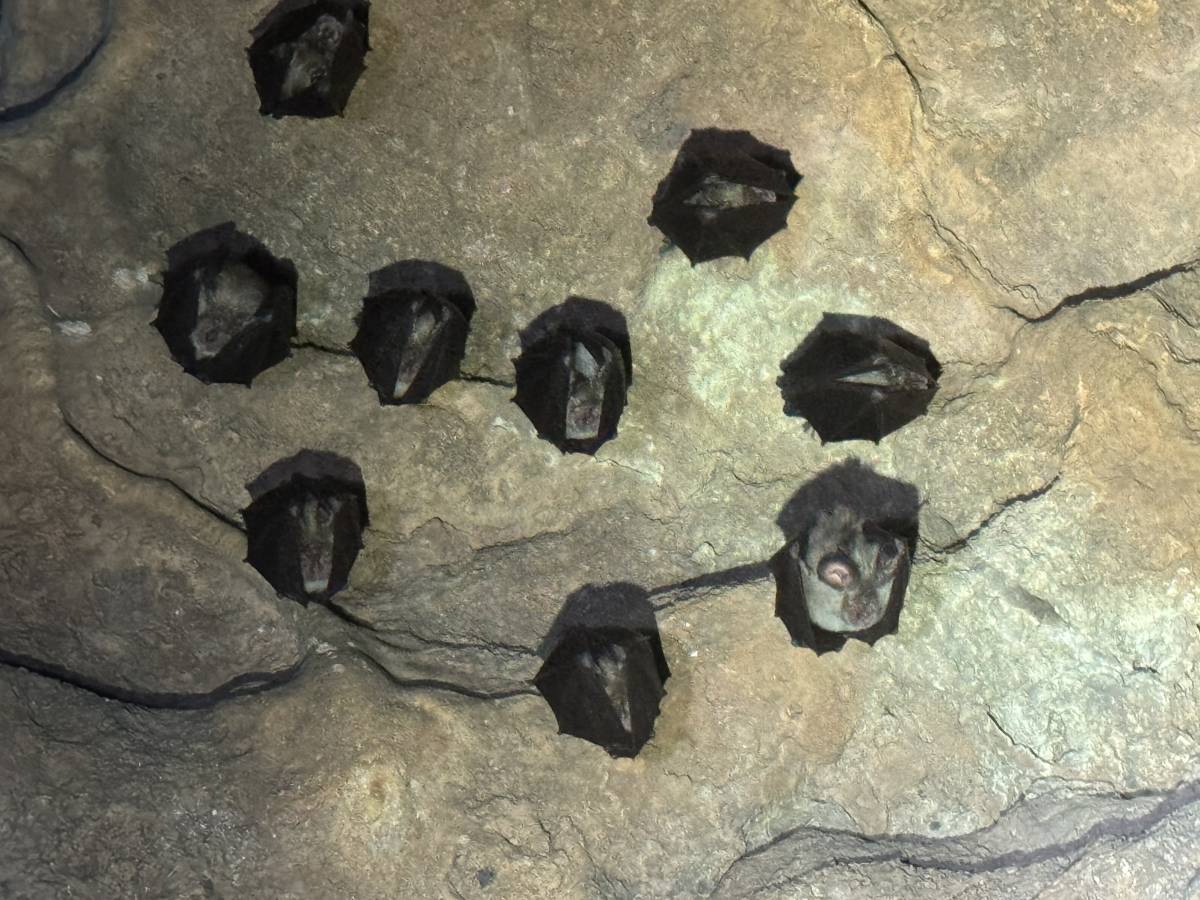


Bats in Winter
It is winter - it's dark, it's cold, and we’re missing our winged mammalian friends. In this blog, we will explore what bats get up to in winter, and what we can do to help them out, even if we can’t see them.
What happens to bats in winter?
During winter, bats hibernate. A lot of us a familiar with the general concept of hibernation - sleeping when it gets cold - but actually, only three British mammals undergo true hibernation. Bats, dormice, and hedgehogs are our true hibernators, whereas other animals enter a state known as torpor. Torpor and hibernation are very similar - both involving the lowering of body temperature and metabolic rate to survive difficult periods. Torpor tends to last for shorter periods of time and is triggered by cold temperatures and food scarcity, whereas hibernation lasts longer and is triggered by hormonal changes in response to day length shortening.
Occasionally, bats will wake up during the winter to forage for food and replenish the fat stocks built up over autumn, or to move roosts.
Where do bats go?
Bats require safe and stable environments in their winter roosts, protecting them from predators and sheltering them from sudden environmental changes. Natural structures that are suitable for bats include veteran trees that have been hollowed out by decay. Bats cannot make roosts themselves in the same way that birds, for example, are capable of constructing intricate nests for themselves, and rely on other animals like burrowing insects, birds, rodents, and natural processed to form gaps in trees that bats can use to enter. Only one species of UK bat can stay in trees throughout the whole winter - noctules, also the biggest UK species! Other natural structures include caves, a stereotypical bat haunt.
Unfortunately, there is a decline in natural structures for bats to utilise as the natural landscape across the UK is being converted to urbanised and agricultural spaces. Bats (and many other species!) are having to adapt to this new environment and are taking advantage of manmade structures instead. Bats often hibernate in disused mineshafts, in well insulated garages and barns, or inside cavity walls of houses.
What can you do for bats this winter?
The main thing we can all do to help bats over winter is to not disturb them. Emerging from hibernation/torpor requires energy, and if there is no food available for bats to replenish that energy when they wake up, they may not be able to survive the winter. If you find an ill or injured bat, call us! We are bat carers, and we really care about bats.
Consider giving bats a Christmas present this year by installing a bat box on your property! Bat boxes can be installed on houses or trees and act as an artificial roost where natural structures are lacking. A good bat box can act as a winter roost for bats that can also be used throughout the year. Bat boxes can be installed on buildings and structures such as houses, garages, fences, and trees. We recommend installing bat boxes at a height of 4m (taking all necessary safety precautions when working from height!) and in an area that is shaded from artificial light. There are many bat box options out there - we recommend any bat boxes approved by the Bat Conservation Trust and personally tend to avoid wooden bat boxes due to their tendency to rot over time.
Please note - all bat boxes are protected under UK law, so once isntalled, your bat box is afforded legal protection which makes it illegal to disturb or alter it without a licence. If you have any concerns about your bat box, or believe it needs to be repaired or replaced, please get in touch and we would be happy to help!