

Bats in Heatwaves
As we inch onwards into summer, temperatures rise, flowers bloom, birds start nesting, and bats are at their most active. What is commonly the most productive time for species is rapidly becoming a time of great peril instead, with extreme temperatures, wildfires, and droughts posing huge threats to the survival of plants, animals, and humans alike.
We all share one planet and thus are all affected by climate change. In the western world, many of us have the privilege to have insulated homes, access to fans, clean water, ice cream, and maybe even air conditioning, which help us stay safe and beat the heat when we encounter heat waves. After just experiencing the first British heat wave of the year, a lot of us might be anxiously anticipating the next, especially as we have only just dipped our toes into the summer season, with many hotter months to come. Maybe we’re deciding to invest in better fans, buy more ice cube trays, get some extra shorts and thin T-shirts, but while fretting over our own comfort, let’s spare some time to consider how this extreme heat is affecting our earth neighbours that don’t have access to these products.
Increases in average temperatures, increase in frequency and extremes of weather events, habitat loss - all massive contributors to our man-made biodiversity crisis. In this blog, we will zoom in and take a look at how bats deal with extreme temperatures and what you can do to help.
HOW BATS COPE WITH HEAT
Natural bat roosts include trees, particularly large veteran trees in diverse woodlands, gaps in rock formations, and caves. Due to rapid human population growth, bats have lost massive areas of suitable roosts and foraging areas, restricting their range to the small parcels of woodland that remain, and forcing them to seek out man-made structures for roosts instead, including homes. In an attempt to compensate for the loss in roosting opportunities, well-meaning conservationists will install bat boxes on houses, sheds, fences, trees, and will build bat houses in fields.
However, recent research has shown that these bat boxes, whilst put up in good faith, can become death traps to bats in the summer. Bat boxes usually only have small crevices, are poorly ventilated and poorly insulated, meaning internal bat box temperatures can rise very quickly. In a large roost, for example, a whole loft space, bats may have the option to move to different parts of the loft throughout the day that may be cooler than others. In a small bat box or bat house however, bats do not have the luxury of that option. Bats are particularly vulnerable to the effects of overheating due to their small size and large surface area to volume ratio caused by their wings and tail membranes.
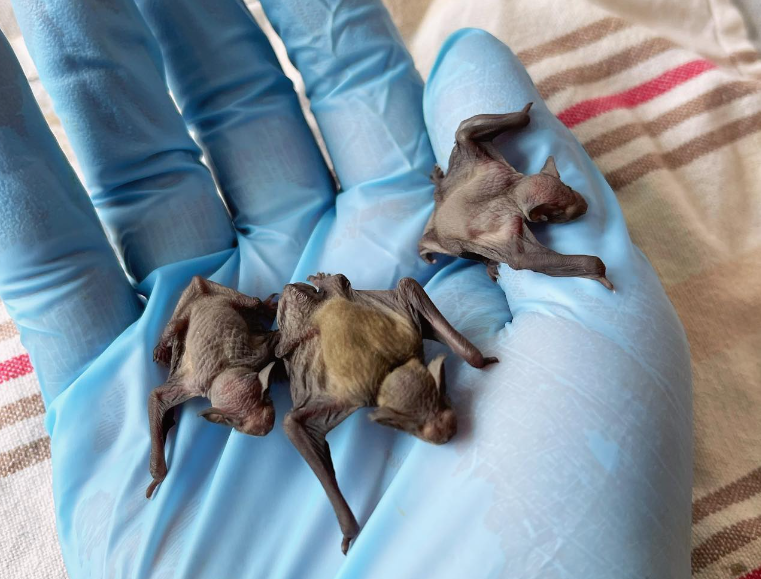
So, what happens when bats get too hot? Unfortunately, bats can become dangerously dehydrated, hyperthermic, and are at risk of death in extreme heats. Some bats may leave a hot roost during the day, flying away to find cooler shelter, but this leaves them at increased risk of predation and potentially more extreme dehydration if a more suitable roost cannot be found. During heat waves, bat helplines are inundated with calls reporting grounded bats. If bats become severely dehydrated, they may fall out of their roosts onto the floor and be unable to take flight and return to safety. Grounded bats, while already being weak and dehydrated, face other risks of injury, particularly from domestic cats.
Unfortunately, bat mums and their babies are more vulnerable to these effects. Female bats form maternity roosts that can contain hundreds of individuals that will give birth and raise their young throughout the summer together. Maternity roosts tend to be warmer than solitary roosts as warm temperatures help with the development of young, and the presence of many individuals in what can be a quite small space increases internal temperature and humidity levels. Studies indicate that female bats are more effectively able to regulate their body temperatures compared to males, but even they have a limit. If maternity roosts become intolerably hot during the day, mothers may leave their young to seek out cooler roosting spots to avoid dehydration.
Mass mortalities and decreased reproductive success can have big impacts on the bat population. Bats only produce an average of 1-2 young per year, so if those babies die and/or their mothers die, it can take years for the population to bounce back. With each consecutive year reaching new temperature highs however, it is unlikely bats will have the reprieve they need to recover.
WHAT CAN WE DO?
It is not all doom and gloom! Bat responses to extreme heat, particularly in the UK, are under-researched, and research is often limited by the lack of long-term studies necessary to fully predict how bats will respond to climate change. That doesn’t mean there aren’t things we can do that will help.
- The main way to help wildlife during heat waves is to leave out water sources - the more the better. Generally, shallow dishes with ramps or stones are preferable as this will minimise the risk of drowning and offer escape routes for any bugs that may end up in the water. For bats, dishes with a larger circumference help them to locate them. Multiple dishes at varying height throughout your garden is a great way to ensure that all wildlife, including bats, have access to clean drinking water.
- When temperature stressed, bats can lose up to 30% of their body weight in water per day, so having plentiful water sources close to their roosts are a great way to help out. Keeping external lights off, especially at sunset, helps make your garden more bat-friendly, particularly for more light-sensitive species.
- Although bat boxes can become death traps, you can strategically place your bat boxes to reduce those risks. Place bat boxes on multiple aspects of your house so they have direct sunlight at different times of day gives bats roosting options that have different temperature regimes, which can be essential for their survival. Making sure bat boxes are available in shaded areas can ensure bats have cooler roosting opportunities in heat waves which could prove essential for their survival.
- If you find a grounded bat during a heat wave, you can help! You can call the National Bat Helpline at 0345 1300 228 and they can help put you in touch with a local bat carer that can collect the bat, nurse it back to health, and then release it back into the wild.
- Finally, if you have the funds and the intention of renovating your home, you have the perfect opportunity to make your house more nature-friendly ! You can incorporate bat and bird boxes into the walls of new builds, add access slates and ridge tile gaps to new roofs, and consult an ecologist about project-specific changes you can make to enhance the biodiversity of your home.
The realities of climate change can be scary for everyone. Strong, flourishing, biodiverse ecosystems are the best ways to combat a changeable world. As part of that ecosystem, looking after our earth-neighbours is akin to looking after ourselves. Look out for wildlife during extreme heat this summer, and you could save a life!